PM Surya Ghar 2.0: What's Changing in India's Solar Subsidy Scheme (and Should You Wait to Install?)
Wondering 'PM Surya Ghar 2.0 kya hai?' Get the latest PM Surya Ghar Yojana 2.0 news, policy updates, and learn about the PM Surya Ghar 2.0 portal.

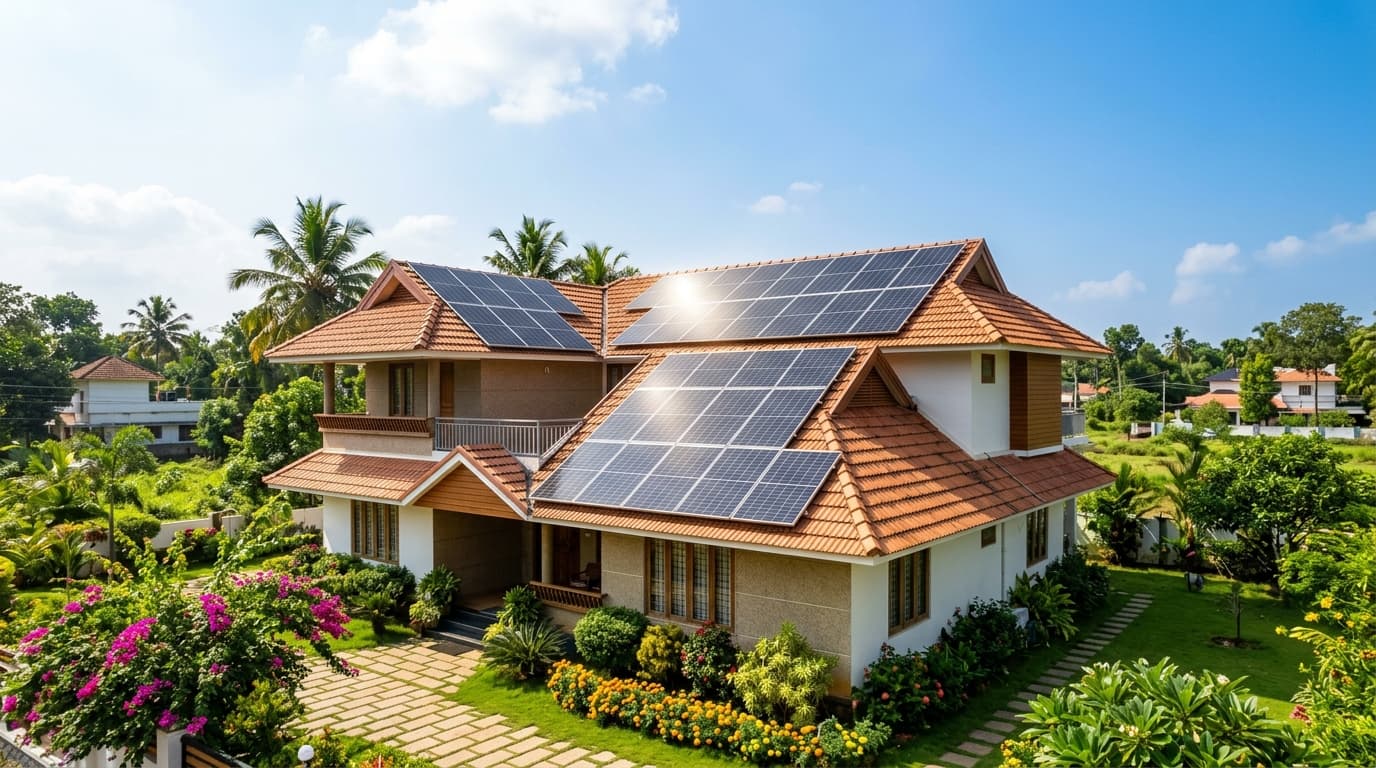
You have probably seen the phrase "PM Surya Ghar 2.0" circulating in solar installer conversations, WhatsApp forwards, and news headlines over the last few months — and if you are planning a rooftop solar installation, a reasonable question has formed in your mind: should I wait? This post gives you a clear, fact-based answer. We cover what PM Surya Ghar 2.0 is, what is reportedly being redesigned, and why the evidence strongly favours acting on the current scheme rather than waiting on an unconfirmed timeline.
PM Surya Ghar 2.0 Kya Hai? (What is PM Solar Yojana 2.0?)
Before getting to what 2.0 might change, it is important to be precise about what it is — and what it is not.
PM Surya Ghar Muft Bijli Yojana (the current scheme) was launched in February 2024 with a total government outlay of over ₹75,000 crore. Its stated goal is to solarise 1 crore (10 million) households by the end of FY 2026-27. As of 22 July 2026, over 39.72 lakh solar systems have been installed nationally, with more than 48 lakh families reporting benefits. The scheme is operational. The portal — pmsuryaghar.gov.in — is active. Subsidies are being disbursed.
PM Surya Ghar 2.0 is not a replacement that has been launched. As of the date of this article, a 2.0 iteration has not been formally notified by the Ministry of New and Renewable Energy (MNRE). What exists is a reported policy redesign exercise — discussions within the ministry and early-stage consultation signals about how the scheme could evolve once the current phase reaches its targets or is reviewed. There is no confirmed rollout date and no official programme document in the public domain.
The name "2.0" is a label being used in industry and media discussions, not an official government designation at this point.
Latest PM Surya Ghar Yojana 2.0 News & Policy Changes
The following features are being discussed or reported as part of a major policy overhaul by the MNRE. None of these is confirmed. They are framed here as proposed or under discussion because that is precisely what they are — treat any source that presents them as definite with scepticism.
-
From Installation to Generation-Linked Subsidies (Proposed): The most significant reported shift is moving from a flat capacity-based subsidy to a split financial-assistance structure. One component might support upfront capital expenditure, while another could be linked to actual electricity generation, lifecycle maintenance, and service delivery. Proposals even include "generation guarantees" and a performance-linked subsidy component that could pay out over time based on verified generation data.
-
Central Focus on Battery Storage (Under Discussion): As daytime power exports increase, managing the grid becomes complex. Reports indicate MNRE is evaluating two complementary storage pathways: behind-the-meter batteries at consumer premises and substation-level battery energy storage systems in the distribution network. A benefit-sharing mechanism is also reportedly being considered, where DISCOMs might share savings realised through power purchase optimisation with consumers who install batteries.
-
Digital Solar Passports and AI Quality Checks (Reported): To shift towards an asset-performance model, the redesign reportedly includes a "Digital Solar Passport." This would be a verifiable, digital record tracking a solar system's output, service history, and warranty status in real time, with AI assisting in verifying installations and detecting defects.
-
Expanded Accessibility via Community Solar (Under Discussion): While the current scheme has already expanded to officially cover balcony solar and building-integrated photovoltaics (BIPV), the 2.0 framework reportedly explores pathways for apartment residents and low-income households through virtual and group net metering. Shared community solar plants of around 100 kW are also being considered to help low-income consumers access the equivalent of 1–2 kW systems.
-
Differentiated Financial Assistance (Proposed): Reports suggest the revised scheme could introduce tiered subsidy amounts based on household income category, geographic location, and the specific services the rooftop system provides to the grid.
Important: A consolidated government policy paper on 2.0 was reportedly expected in the near term as of mid-2026, to be followed by a stakeholder consultation period. None of this had been formally published at the time of writing. For the most current status, always refer to pmsuryaghar.gov.in — the official MNRE portal — rather than secondary reports.
What Stays the Same Right Now
While 2.0 is under discussion, the current PM Surya Ghar Muft Bijli Yojana is fully active and unchanged. Here is what that means for you today:
The central subsidy structure is unchanged:
| System Capacity | Subsidy Calculation | Total Central Subsidy |
|---|---|---|
| 1 kW | ₹30,000 × 1 kW | ₹30,000 |
| 2 kW | ₹30,000 × 2 kW | ₹60,000 |
| 3 kW | (₹30,000 × 2 kW) + (₹18,000 × 1 kW) | ₹78,000 |
| Above 3 kW | Subsidy capped at 3 kW equivalent | ₹78,000 |
The application process is unchanged. The eight-step process — from portal registration through DISCOM feasibility, vendor selection, installation, net metering, and Direct Benefit Transfer disbursement — is the same process that has been processing applications since 2024. For a full step-by-step walkthrough, see our PM Surya Ghar application guide.
Eligibility criteria are unchanged. Residential homeowners with an active UPPCL connection, a property they own, and a system sized within their sanctioned load remain fully eligible under the current scheme. For the full eligibility checklist and UP-specific state top-up details, see our PM Surya Ghar subsidy guide.
The scheme is well-funded and on track. With over ₹75,000 crore allocated, a target of 1 crore households by FY 2026-27, and nearly 40 lakh systems already installed, the current scheme has the financial backing and operational momentum to continue delivering subsidies for the foreseeable term.
Should You Wait for PM Surya Ghar 2.0?
The honest answer is: the data points firmly toward installing now, not waiting.
Here is why, without any sales pressure — just the facts:
There is no confirmed date for PM Surya Ghar 2.0. Policy redesigns in India's energy sector routinely take 12 to 24 months from discussion to formal notification, followed by additional time before implementation. Even optimistic timelines put any operational 2.0 scheme at least a year away. Waiting on an unconfirmed redesign means potentially waiting through an entire monsoon season, price cycles, and a period when electricity bills continue accumulating.
The current scheme is actively funded and disbursing. Over 39.72 lakh installations as of late July 2026 confirm this is not a scheme in wind-down mode — it is a scheme in full operation, with the government actively working toward its 1 crore target. New applicants approved today are being processed and paid.
The proposed 2.0 features are not guaranteed improvements for everyone. Performance-linked subsidies, for example, could add complexity and uncertainty for residential homeowners who currently receive a straightforward capacity-based payment. Whether a redesigned scheme will be more or less advantageous than the current one is genuinely unknown — and not a basis for delaying a financially sound decision today.
Your existing rights are not at risk. If you install under the current scheme and 2.0 is eventually launched, nothing in the reported discussions suggests that existing beneficiaries would lose their sanctioned subsidy or face clawbacks. Scheme transitions in India typically grandfather existing beneficiaries.
The case for installing now is simply the current scheme, as-is: up to ₹78,000 in central subsidy (plus UP state top-up of up to ₹30,000 if you are in Uttar Pradesh), a functional application process, and electricity bill relief that begins accruing the month your system goes live. Use our solar EMI calculator to see what a financed installation looks like for your monthly budget after subsidy.
For homeowners in Lucknow, Varanasi, and Gorakhpur — cities where Ensolvar has active operations — the DISCOM pipelines for Lucknow solar installations, Varanasi rooftop solar, and Gorakhpur solar systems are currently processing applications at typical timelines. There is no backlog signal that suggests waiting would lead to faster processing under a hypothetical future scheme.
How Ensolvar Can Help You Apply Today
Ensolvar is a UPNEDA-authorised solar installer empanelled on the PM Surya Ghar national portal, operating across all 75 districts of Uttar Pradesh. Every installation we complete uses ALMM List-I and List-II compliant panels — meeting MNRE's requirements for full subsidy eligibility.
We handle the complete PM Surya Ghar pipeline on your behalf:
- Portal registration and Form A submission
- DISCOM feasibility coordination across all five UP DISCOMs
- ALMM-compliant installation with panels from verified manufacturers
- Net metering application and UPPCL inspection liaison
- Commissioning certificate upload and subsidy disbursement tracking
No subsidy is claimed until your bank confirms the credit.
Ready to Apply Before the Deadline Season?
Message us your consumer number, district, and approximate roof area — we will confirm your eligibility, check DISCOM load availability, and walk you through the next step at no cost.
Or reach us through the contact form at ensolvar.com/contact. You can also use our solar EMI calculator to plan your budget before we speak.
Frequently Asked Questions
PM Surya Ghar 2.0 is the informal name being used in industry and media discussions for a proposed redesign of India's current PM Surya Ghar Muft Bijli Yojana rooftop solar scheme. As of July 2026, it has not been formally notified by MNRE — there is no official programme document, no confirmed launch date, and no replacement of the current scheme. The current scheme continues to operate normally.
Under the reported PM Surya Ghar 2.0 proposals, a Digital Solar Passport would be a verifiable digital record tied to a common data protocol. It would track your solar system’s output, service history, and warranty status in real time, making it easier to claim warranties, ensure lifecycle maintenance, or transfer ownership.
Battery storage is reportedly a central focus of the 2.0 discussions. Proposals include support for behind-the-meter household batteries and benefit-sharing mechanisms with DISCOMs. However, battery storage is not separately subsidised under the current scheme, and these new proposals have not yet been formally notified by MNRE.
Under the proposals currently being discussed, yes. The ministry is reportedly exploring shared community solar plants (around 100 kW) and virtual net metering to allow apartment dwellers and those without usable rooftops to participate (note: balcony solar and BIPV are already eligible under the current scheme).
There is no confirmed launch date. The proposed 2.0 redesign is at a discussion and early-consultation stage as of the date of this article. Policy redesigns in India's energy sector typically take 12 to 24 months from discussion to formal implementation. For the latest official status, monitor pmsuryaghar.gov.in — MNRE's official portal.
Currently, the official portal is pmsuryaghar.gov.in. If the 2.0 policy is implemented, it is highly likely that the existing infrastructure will simply be upgraded to act as the PM Surya Ghar Yojana portal 2.0 rather than creating an entirely new website.
The current PM Surya Ghar Muft Bijli Yojana has a stated goal of solarising 1 crore households by the end of FY 2026-27. The scheme will actively run and disburse subsidies until that target is achieved.
Nothing in the reported 2.0 discussions suggests that existing beneficiaries — people who have already applied or received subsidy under the current scheme — would face any clawbacks or loss of approved amounts. Scheme transitions in India's solar policy have historically grandfathered existing beneficiaries. If you are mid-application today, completing your application under the current scheme protects your subsidy claim under the rules you applied under.
The evidence points firmly toward applying now. The current scheme is fully funded (over ₹75,000 crore outlay), actively disbursing subsidies (over 39.72 lakh systems installed as of July 2026), and has no confirmed end date. PM Surya Ghar 2.0 has no confirmed timeline. Waiting on an unconfirmed policy change means delaying real financial benefits — up to ₹78,000 in central subsidy plus UP state top-up — with no guarantee that a future scheme will be more advantageous for your specific situation.
The only authoritative source is the Ministry of New and Renewable Energy (MNRE) via its official portal: pmsuryaghar.gov.in. Any formal notification of a new scheme or scheme revision will be published there first. Treat social media reports, forwarded messages, and unofficial installer communications about "2.0 launching soon" with caution until official notification appears on the MNRE portal.
The current PM Surya Ghar scheme has already helped nearly 40 lakh Indian families generate their own electricity and reduce their bills — with a central subsidy that can reach ₹78,000, plus UP's state top-up of up to ₹30,000. That is a real, active benefit available today, not dependent on any future policy announcement. If you are ready to evaluate your installation, get in touch with Ensolvar — we will assess your roof, confirm your subsidy eligibility, and handle the complete application process.
This article was first published on 29 July 2026. PM Surya Ghar policy can move quickly — always cross-verify the status of any scheme changes with the official PM Surya Ghar portal or contact Ensolvar for current advice before making installation decisions.