DCR vs Non-DCR Solar Panels: The Complete 2026 Guide to ALMM & Subsidies
Confused by DCR vs Non-DCR solar panels? We explain ALMM List-II, the June 2026 MNRE policy update, the Give It Up exemption, and real cost differences.

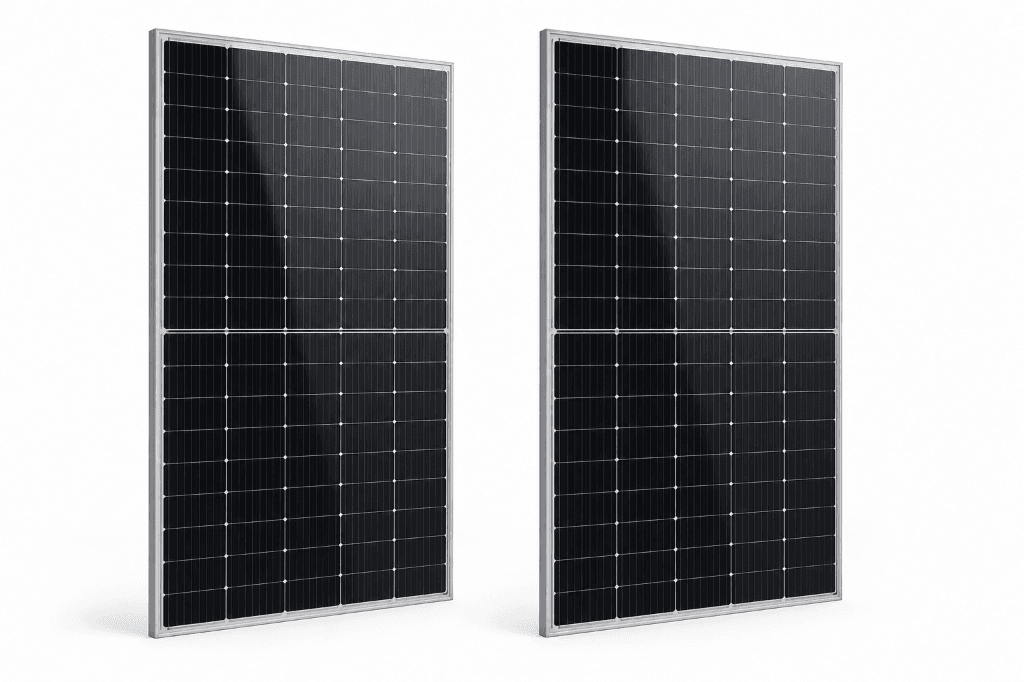
If you've been quoted solar panels recently, chances are an installer mentioned the words "DCR" or "Non-DCR" — and then either glossed over the difference or gave you a confusing half-answer. You're not alone. This single piece of jargon is responsible for more customer confusion, missed subsidies, and bad purchasing decisions than almost anything else in the Indian solar market.
This guide will fix that. We'll explain what DCR actually means, bust the myths that surround it, walk you through the critical June 2026 MNRE rule change, and give you a clear decision framework so you know exactly which type of panel your specific project needs.
Quick links: Not sure what solar panel technology is right for you? Read our guide on types of solar panels first. Already sold on solar and want to estimate costs? Use our solar installation cost calculator.
What Does DCR Actually Mean — and What Does It Have Nothing to Do With?
Let's start with the most important clarification in this entire article, because getting this wrong leads to everything else going wrong.
DCR stands for Domestic Content Requirement.
A DCR-compliant solar panel is one where both the solar cells AND the solar module are manufactured in India. That's it. It is a manufacturing-origin classification defined by the Ministry of New and Renewable Energy (MNRE) under the Make in India initiative — designed to build India's domestic solar supply chain and reduce dependence on imported, primarily Chinese, components.
Myth Busted Right Now: DCR Is NOT About Quality
Here is the single most damaging misconception in the solar market: DCR vs Non-DCR has absolutely nothing to do with panel efficiency, reliability, power output, or how electricity is generated. Zero. It is purely a policy and manufacturing-origin distinction.
A DCR panel and a Non-DCR panel of the same wattage generate electricity in exactly the same way, will last equally long (given comparable build quality), and will perform comparably on your roof. Many Indian manufacturers now produce DCR panels using advanced Mono PERC and TOPCon cell technology that matches or exceeds the efficiency of imported panels.
The confusion persists because some installers incorrectly use "DCR" as shorthand for "lower grade" and "Non-DCR" for "premium imported." This is simply wrong — and it has cost homeowners real money by steering them away from subsidy-eligible panels for no good reason.
ALMM List-I vs List-II: The Most Misunderstood Part of DCR
Now that you understand what DCR means, you need to understand how the government certifies it — because this is where the real confusion lives in 2026.
MNRE maintains the Approved List of Models and Manufacturers (ALMM), a quality and manufacturing-origin certification registry for solar panels sold in India. ALMM is divided into two distinct lists:
ALMM List-I: Module Assembly Certification
List-I certifies that the solar module (the finished panel) was assembled in India. This is the more common and easier-to-obtain certification. A large number of Indian manufacturers appear on List-I — including many who import their solar cells from abroad.
The critical catch: Before June 1, 2026, a panel could appear on ALMM List-I even if the solar cells inside it were imported — most commonly from China. The module was assembled in India, but the cells (the actual photovoltaic semiconductor wafers that generate electricity) came from overseas. This was the exact gap the June 2026 enforcement order was designed to close.
ALMM List-II: Domestic Cell Manufacturing Certification
List-II certifies something far stricter: that the solar cells themselves were manufactured in India. This requires actual cell fabrication capacity inside the country, which is significantly more capital-intensive than module assembly. As of December 2025, India has approximately ~27–30 GW of domestic cell manufacturing capacity against over 210 GW of module assembly capacity — a real and significant supply gap that explains why List-II compliant panels carry a price premium. (Source: Mercom India, State of Solar PV Manufacturing in India 2026.)
Simple example to make this crystal clear:
A company imports ready-made solar cells from a factory in Jiangsu, China, then frames and laminates them into panels at its Gujarat factory. That finished panel passes ALMM List-I (assembled in India ✓) but fails ALMM List-II (cells not made in India ✗). Under post-June 2026 rules, it is not truly DCR-compliant and does not qualify for government subsidies.
To be fully DCR-compliant from June 2026 onwards, a panel must appear on BOTH List-I and List-II.
The June 1, 2026 Policy Update: What Changed and Why It Matters
This is the most important regulatory change in Indian solar policy in recent years — and the one that most buyers and even some installers haven't fully absorbed.
From June 1, 2026, MNRE made ALMM List-II certification mandatory for solar panels used in:
- PM Surya Ghar Muft Bijli Yojana (the main residential rooftop subsidy scheme)
- PM-KUSUM Components B and C (agricultural solar pump and feeder-level solarisation)
- CPSU Phase-II (Central Public Sector Undertaking solar programme)
- Government tenders and PSU procurement
- Open access solar projects
- Net-metered solar installations
Before this change, List-I compliance alone was sufficient for most of these schemes. From June 1, 2026, panels that only appear on List-I — assembled in India using imported cells — no longer qualify for subsidy or net metering.
Was any blanket extension granted? No. MNRE explicitly confirmed that no general extension was issued. The June 1, 2026 deadline stood. If your installer suggests otherwise without citing a specific, dated official memorandum, treat that with caution.
Regulatory reminder: Solar policy in India evolves quickly. Always verify the current ALMM list status of your proposed panels on the official PM Surya Ghar portal or with your installer before purchase — exemption windows have hard deadlines.
The "Give It Up" Exemption: What It Is and Who It Helps
MNRE's June 8, 2026 office memorandum introduced a specific carve-out for residential homeowners under PM Surya Ghar — and it's worth understanding clearly.
What Is the Give It Up Exemption?
Homeowners enrolled under PM Surya Ghar Muft Bijli Yojana who voluntarily forgo the central subsidy (up to ₹78,000 for a 3kW system) and opt for net metering only are exempt from the ALMM List-II requirement until March 31, 2027.
In plain English: if you decide you don't want the government subsidy, you can install solar with panels that only meet ALMM List-I (assembled in India, imported cells), and the government will still allow your system to be grid-connected for net metering purposes.
Key Details to Know
- Applies only to residential PM Surya Ghar consumers — not commercial, not agricultural
- Opt-in via the PM Surya Ghar National Portal (not the NISE DCR portal — these are separate systems)
- Expires March 31, 2027 — after which full List-II compliance is required even for net metering
Should You Actually Take the Give It Up Exemption?
For almost every homeowner: no. The next section on costs explains why the numbers almost never add up in favour of giving up the subsidy.
Who Is Actually Affected? A Clear Breakdown
Mandatory DCR / ALMM List-II
| Scheme or Project Type | List-II Mandatory? |
|---|---|
| PM Surya Ghar Muft Bijli Yojana (subsidy route) | Yes |
| PM-KUSUM Component B (feeder solarisation) | Yes |
| PM-KUSUM Component C (agricultural pump solarisation) | Yes |
| CPSU Phase-II | Yes |
| Government / PSU tenders | Yes |
| Open access solar projects | Yes |
| Net-metered residential systems | Yes |
Exempt or Currently Flexible
| Situation | Status |
|---|---|
| PM Surya Ghar "Give It Up" consumers (no subsidy, net metering only) | List-II exempt until Mar 31, 2027 |
| Private behind-the-meter C&I — no subsidy, no net metering, no open access | Currently no mandate — verify case-by-case |
| Systems fully commissioned before June 1, 2026 | Grandfathered under prior rules (see note below) |
Note on near-commissioned projects: Projects where modules were physically installed but commissioning was delayed due to DISCOM processing, and projects that achieved financial closure or ≥75% land procurement before June 1, 2026, may qualify for case-by-case exemptions via the NISE DCR Portal (open for registration until July 23, 2026). Contact MNRE or your installer if your project falls into this category.
The Honest Cost Comparison: DCR vs Non-DCR in 2026
Why Do DCR Panels Cost More?
Because domestic cell manufacturing capacity in India is genuinely constrained. The ~27–30 GW cell capacity vs. over 210 GW module capacity gap means List-II compliant cells are in shorter supply, which keeps prices higher. Historically, the DCR premium reached 20–30% (circa 2018). As PLI-incentivised investments in domestic cell lines have scaled up, that gap has compressed to a baseline of approximately 12–18% in mid-2026, depending on wattage and cell technology.
One important 2026 caveat: the enforcement of ALMM List-II from June 1, 2026 triggered a short-term supply squeeze for compliant cells, pushing TOPCon DCR premiums temporarily higher (20–25%+ in June–July 2026 according to market reports). This is expected to ease as additional domestic cell capacity comes online through PLI-funded expansions.
The Financial Calculation for Homeowners
Most homeowners hear "DCR costs more" and stop there. Here's the complete picture:
- PM Surya Ghar central subsidy: up to ₹78,000 for a 3kW system
- Typical DCR 3kW system cost: ₹1,40,000 – ₹1,60,000
- Typical Non-DCR 3kW system cost: ₹1,15,000 – ₹1,40,000 (roughly 12–18% less at mid-2026 baseline; may vary with current supply conditions)
- Panel cost saving from Non-DCR: ₹20,000 – ₹30,000 at most
- Subsidy forfeited by choosing Non-DCR: ₹78,000
Net financial loss from choosing Non-DCR as a subsidy-eligible homeowner: ₹48,000 – ₹58,000 — still a very large number compared to the panel cost saving.
This comparison makes the decision obvious for the overwhelming majority of residential buyers. The DCR premium is real but small. The subsidy it unlocks is large.
Full DCR vs Non-DCR Comparison Table
| Feature | DCR Solar Panels | Non-DCR Solar Panels |
|---|---|---|
| Manufacturing | Cells + module both made in India | Imported cells (or fully imported panel) |
| ALMM Certification | List-I + List-II (both required) | List-I only, or neither |
| PM Surya Ghar Subsidy | ✅ Eligible (up to ₹78,000) | ❌ Not eligible |
| Net Metering (post-June 2026) | ✅ Allowed | ❌ Not allowed (unless Give It Up exemption) |
| Price Premium (2026) | ~12–18% higher per watt (baseline; may be higher during supply constraints) | Lower per watt |
| Panel Technology | Mono PERC, TOPCon increasingly available | Widest selection (TOPCon, HJT, IBC) |
| Market Availability | Limited by domestic cell capacity | Broader options |
| Quality vs Same Spec | Comparable | Comparable |
| Best For | Homeowners with subsidy, KUSUM farmers, govt projects | Private C&I (no scheme), Give It Up route |
Which Should YOU Choose? A Decision Framework by Buyer Type
Residential homeowner applying for PM Surya Ghar subsidy
→ DCR (ALMM List-I + List-II). No exceptions. Confirm your installer's proposed panels appear on the current ALMM List-II before signing. The subsidy you'd forfeit by going Non-DCR is nearly always larger than any panel cost saving.
Residential homeowner not applying for subsidy, or opting for Give It Up
→ Either — but think hard before giving up ₹78,000. The Give It Up exemption (valid until March 31, 2027) allows List-I panels for net metering. But financially, forgoing the subsidy rarely makes sense unless DCR panels are genuinely unavailable in your area with unreasonable lead times.
Commercial or industrial buyer with no government scheme link
→ Either is currently permissible — but verify your specific situation carefully. No net metering, no open access, no subsidy = no DCR mandate as of mid-2026. Non-DCR gives you access to the widest technology range (HJT, TOPCon bifacial, IBC). However, note that most C&I solar projects in India do use net metering or open access to manage surplus generation — once either arrangement is involved, the ALMM List-II mandate applies immediately. The Non-DCR exemption is effectively limited to zero-export captive installations. Given regulatory momentum, always confirm current rules with your installer before finalising procurement.
Farmer under PM-KUSUM (Component B or C)
→ DCR (ALMM List-I + List-II) is mandatory. This is a scheme-linked project under post-June 2026 rules. Your system developer must source List-II compliant panels.
3 Common Myths About DCR — Definitively Debunked
Myth 1: "Non-DCR panels are banned everywhere in India"
False. Non-DCR panels are prohibited only in government-scheme-linked projects and net-metered installations as of June 2026. Private commercial and industrial installations with no subsidy, net metering, or open access involvement are still free to use Non-DCR panels. The restriction is scheme-specific, not a blanket nationwide ban.
Myth 2: "DCR panels are lower quality than imported Non-DCR panels"
False. This is an outdated and inaccurate conflation of "domestic" with "inferior." Indian manufacturers like Waaree, Adani Solar, Vikram Solar, Goldi Green, and Premier Energies now produce ALMM List-II compliant panels — predominantly using TOPCon cell technology (which has become the industry standard for high-efficiency DCR modules by mid-2026), with Mono PERC representing the legacy mid-range. Efficiencies reach 20%–23%+, backed by international quality certifications (IEC, BIS), and many of these manufacturers export globally: Waaree is listed on the BSE and exports to over 68 countries; Premier Energies became publicly listed in 2024 and has scaled to ~2 GW of integrated cell + module capacity. A DCR TOPCon panel at 22% efficiency is not a lesser product than a Non-DCR TOPCon panel at 22% efficiency — they are, by definition, equivalent.
Myth 3: "Assembled in India = DCR"
False — and this is the one that has directly cost homeowners their subsidies. Panels assembled in India from imported Chinese cells pass ALMM List-I but fail ALMM List-II. Under post-June 2026 rules, they are not DCR-compliant for subsidy or net-metered purposes. Always ask your installer to confirm List-II status specifically — not just List-I.
Frequently Asked Questions About DCR and Non-DCR Solar Panels
DCR stands for Domestic Content Requirement. It is a classification by India's Ministry of New and Renewable Energy (MNRE) requiring that both the solar cells and the solar module (finished panel) be manufactured in India. It is a manufacturing-origin policy distinction and has no bearing on panel efficiency or quality.
No — not entirely. Non-DCR panels are banned in projects linked to government subsidy schemes (PM Surya Ghar, PM-KUSUM, CPSU Phase-II), government tenders, open access projects, and net-metered installations as of June 1, 2026. Private commercial and industrial installations without any of those scheme linkages may still use Non-DCR panels. Always verify your specific project's requirements.
Your installation will be ineligible for the central subsidy (up to ₹78,000 for a 3kW system) and your DISCOM may reject your net metering application. This is a significant financial and operational consequence. Before installation, ensure your installer confirms that your panels appear on both ALMM List-I and List-II.
The Give It Up exemption, introduced by MNRE's June 8, 2026 office memorandum, allows PM Surya Ghar residential consumers to voluntarily waive the central subsidy and opt for net metering without needing ALMM List-II panels — valid until March 31, 2027. It is applied through the PM Surya Ghar National Portal (not the NISE DCR portal). Financially, forgoing ₹78,000 in subsidy rarely makes sense for most homeowners.
No. DCR is a manufacturing-origin classification, not a quality grading. Indian manufacturers now produce DCR-compliant Mono PERC and TOPCon panels at 20%–23%+ efficiency with IEC and BIS certifications, comparable to imported alternatives at the same specification.
Yes, in many cases. If a commercial project has no government subsidy, no net metering, and no open access, Non-DCR panels are currently permissible as of mid-2026. However, if the project involves open access, PSU procurement, or any government scheme, full ALMM List-II compliance is required. Verify your specific project's regulatory position with your installer before finalising procurement.
Before You Buy: A Quick ALMM Verification Checklist
- Ask your installer for the exact panel model number and request written confirmation it appears on the current MNRE ALMM List-II (not just List-I).
- Cross-check on the MNRE portal — the ALMM list is public and updated periodically.
- Check the date — a panel's List-II listing can lapse if a manufacturer's certification expires. Confirm the listing is currently active.
- Get it in writing — subsidy eligibility and ALMM compliance should be explicitly referenced in your installation agreement.
The Bottom Line
DCR vs Non-DCR is, at its core, a simple distinction made complicated by jargon and misinformation:
- DCR = cells AND module made in India = ALMM List-I + List-II = required for subsidies, net metering, and scheme-linked projects from June 2026
- Non-DCR = foreign cells = may pass List-I only = no subsidy eligibility, restricted net metering
For most Indian homeowners, the answer is unambiguous: choose DCR-compliant panels and claim your PM Surya Ghar subsidy. The ₹78,000 you'd forfeit by going Non-DCR vastly exceeds any panel cost saving.
For commercial and industrial buyers without government scheme links, Non-DCR remains a valid option — verify your specific regulatory position.
For everyone: always confirm ALMM List-II status before purchase, not after.
Want to go deeper on related topics?
- 📖 Types of Solar Panels Explained: Mono PERC, TOPCon, HJT & More — Understand panel technologies independent of DCR classification
Confused About DCR Compliance for Your Subsidy Application?
Don't risk your ₹78,000 subsidy on a compliance mistake. Ensolvar's solar experts verify ALMM List-II status on every panel we recommend and handle the full PM Surya Ghar portal application on your behalf — so your system qualifies the first time, without delays.