GI vs HDGI vs Aluminum: Which Solar Mounting Structure Actually Lasts in Uttar Pradesh?
Comparing GI vs HDGI solar structures? Learn the GI and HDGI full forms, material differences, and why HDGI structure is the best choice for solar.

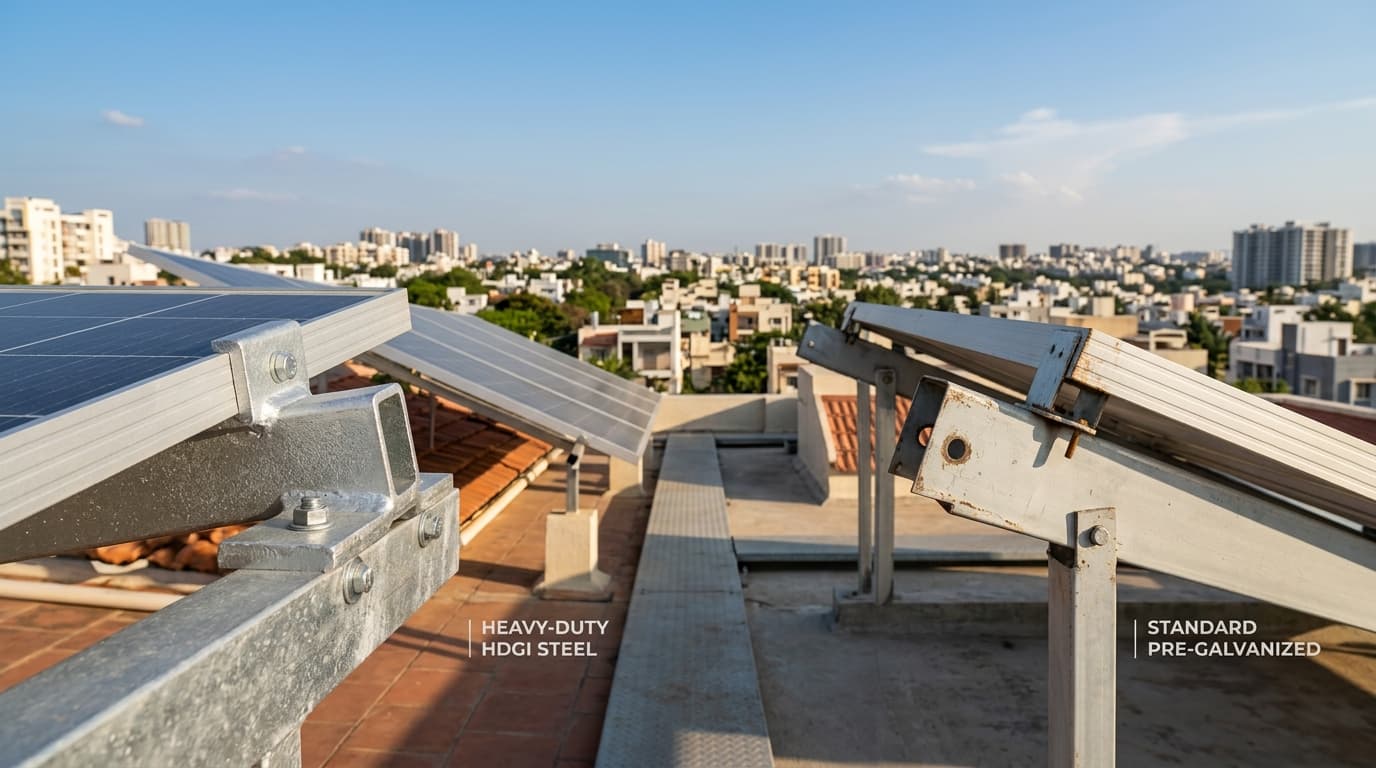
When you invest in a rooftop solar system, the first things you check are likely the wattage of the panels and the brand of the inverter. But the mounting structure holding those panels to your roof is the unglamorous foundation of your entire investment. If that structure fails or rusts out prematurely, your premium panels will not survive their 25-year expected lifespan.
If you are comparing quotes from different solar installers across Uttar Pradesh, you have probably noticed variations in the "structure material" line item. Some quote "GI," others "HDGI," and some might even list "Painted MS." What do these acronyms mean, and more importantly, which one actually lasts long enough to protect your investment without overpaying?
Why the HDGI Material Matters as Much as the Panels
In India, structural steel for solar mounting is typically specified according to IS 2062:2011 standards, with a general minimum material thickness of around 2.5mm for the structure itself. But bare steel exposed to the elements will quickly rust. To prevent this, the steel is coated—most commonly with zinc, a process known as galvanization.
The core difference between the types of structures quoted by installers comes down to when the zinc is applied and how thick that coating is. This directly impacts the total lifecycle cost of your solar system. A cheaper structure might lower your initial quote, but if it requires replacement or extensive maintenance midway through your solar panels' lifespan, it is no longer the most economical choice.
What Is the GI Structure Full Form?
The GI structure full form is Galvanized Iron. When an installer quotes a "GI" or "Pre-Galvanized" solar structure, they are referring to steel that was coated with zinc at the mill, before it was cut and shaped into a solar mounting frame.
Pre-galvanized (mill-coated) steel is typically fabricated using sheets of steel (like 550 GSM steel) that already have a zinc coating. The galvanization coating on this type of steel typically maxes out around 20 microns per side.
Because the steel is coated before fabrication, any later cutting, drilling, or welding required to assemble your solar structure exposes unprotected, bare steel at those newly cut edges. These exposed points become primary rust-initiation zones.
This does not mean a GI structure will automatically fail. In highly dry, low-humidity environments well away from coastal or monsoon-heavy zones, many economical GI installations perform fine for years. However, its lower coating thickness and unprotected edges make it more vulnerable to long-term environmental stress.
What Is the HDGI Full Form?
The HDGI full form is Hot-Dip Galvanized Iron. When comparing HDGI vs GI, the HDGI structure takes a fundamentally different mechanical approach. In hot-dip galvanization, the structure is fabricated, cut, and drilled first. Only after the entire piece is shaped is it dipped into a bath of molten zinc at approximately 450°C.
This process forms a metallurgical zinc-iron alloy bond with the steel surface rather than just sitting on top like a paint coating. Because it is dipped after fabrication, every surface, including joints, welds, and cut edges, is fully coated and protected.
The other massive differentiator is coating thickness. While pre-GI maxes out around 20 microns, HDGI typically specifies a minimum zinc thickness of around 80 microns. Furthermore, industry guidance commonly recommends 120-150 microns for structures that are expected to perform reliably over a full 25-year system lifespan.
This represents roughly a 4 to 6x+ difference in coating thickness compared to standard GI. Additionally, even if a hot-dip coating gets slightly nicked or scratched during transport or installation, the surrounding thick zinc layer can continue to offer some "cathodic protection" to small exposed areas—a documented chemical property that paint or powder coatings do not have (though large breaches still require proper touch-up).
What About Aluminum Structures?
While GI and HDGI rely on zinc coatings to protect steel, aluminum is sometimes proposed as an alternative mounting structure. Aluminum prevents corrosion through a completely different mechanism—it naturally forms an oxide layer that seals the metal from further degradation.
Aluminum is generally lighter, which reduces the structural load on older or lighter-construction roofs. However, aluminum is significantly more expensive, typically costing ₹100-130/kg compared to ₹70-90/kg for galvanized iron. In general, steel-based structures like HDGI are 20-30% less expensive than comparable aluminum structures and offer superior load-bearing capacity for heavy wind loads.
Aluminum is typically the better choice in specific scenarios, rather than standard RCC (concrete) rooftop installations. For example, on tin or metal shed roofs, aluminum rails are often preferred or strictly required to prevent galvanic corrosion that occurs when dissimilar metals come into contact—a highly relevant consideration given the significant stock of tin-shed roofing in tier-2 and tier-3 towns across UP.
HDGI Structure vs GI Structure: Material Comparison
Some ultra-low-cost quotes may include Painted or Powder-Coated Mild Steel (MS), which offers significantly lower durability and should not be confused with true galvanization.
Here is a plain-language comparison of your main options:
| Feature | Painted MS | Pre-Galvanized (Standard GI) | Hot-Dip Galvanized (HDGI) | Aluminum |
|---|---|---|---|---|
| Corrosion Mechanism | Paint layer on surface | Thin zinc coat (pre-fabrication) | Thick zinc alloy (post-fabrication) | Natural oxide layer |
| Cost Profile | Lowest | Base material: ₹70-90/kg | Base material + hot-dip process | Highest (₹100-130/kg) |
| Joint Protection | Poor | None (bare steel exposed) | Complete | Inherent to material |
| Relative Weight | Heavy | Heavy | Heavy | Light |
| Best-Use Scenario | Temporary indoor setups | Dry, low-humidity climates | Standard RCC rooftops (long-term) | Tin-shed roofs or weight-limited installs |
A Note on Premium/Emerging Materials: For highly corrosive coastal or industrial environments, materials like Zn-Al-Mg (ZAM) coated steel offer self-healing protection at cut edges that generally outperforms standard HDG. Meanwhile, Stainless Steel provides extreme durability for industrial applications. Both are premium, high-cost options that are generally unnecessary for standard residential rooftop solar in UP.
Why This Matters More in Uttar Pradesh's Climate
Uttar Pradesh features incredibly varied climate stresses that test the limits of outdoor steel structures.
If you live in eastern UP—such as Varanasi or Gorakhpur—your solar structure must endure periods of high humidity and intense monsoon exposure. Moisture trapped in the exposed joints and drilled holes of a pre-galvanized GI structure can rapidly accelerate corrosion.
Conversely, in central or western UP—such as Lucknow or the Bundelkhand region—high heat stress and blowing dust can wear down thinner coatings over time. Across the entire state basin, the heavy monsoon season guarantees that your solar structure will be repeatedly soaked. The thicker, metallurgically bonded coating of HDGI—particularly the protection it provides to otherwise vulnerable joints—is highly advantageous for weathering these UP-specific climate realities over a quarter of a century.
What Ensolvar Uses, and Why
As a UPNEDA-authorised and MNRE-approved installer, Ensolvar prioritises long-term reliability over artificially lowering our initial quote with inferior materials. We strongly recommend and utilize HDGI (Hot-Dip Galvanized Iron) structures for our rooftop solar installations.
We are transparent about the fact that HDGI costs slightly more upfront than standard GI or painted mild steel. However, we believe this is an essential, honest trade-off. By paying slightly more for a structure with 4 to 6 times the zinc coating thickness and fully protected joints, you are drastically lowering the probability of premature corrosion. It protects your property, keeps your expensive solar panels securely anchored during storms, and provides the lowest total cost of ownership across your system's lifespan.
Questions to Ask Any Solar Installer About Their Structure
To protect yourself and ensure you are comparing apples to apples when looking at different quotes, ask these specific questions:
- "Are you using Pre-Galvanized GI or Hot-Dip Galvanized (HDGI) steel?"
- "What is the micron thickness of the zinc coating?" (Look for 80+ microns for HDGI).
- "Is the structure dipped after cutting and drilling, or before?"
- "Does the structure meet IS 2062:2011 structural standards and IS 4759 galvanization standards?"
A trustworthy installer will readily answer these questions and explain the rationale behind their material choices.
Frequently Asked Questions
Not necessarily. In very dry climates with low humidity, standard GI structures can last for years. However, in regions with heavy monsoons or high humidity, the unprotected cut edges and thinner zinc coating (around 20 microns) of a pre-galvanized structure make it far more susceptible to premature rust compared to HDGI.
HDGI is more expensive upfront because the hot-dip galvanization process is more resource-intensive and applies 4 to 6 times more zinc to the steel. While exact market prices fluctuate, the slight premium paid for HDGI pays off by preventing structural replacements midway through your solar panels' 25-year lifespan.
No. Solar panels are designed to last 25 years or more. Your mounting structure sits on your roof, exposed to intense sun, heavy monsoon rains, and wind for that entire duration. HDGI is widely considered the industry standard for ensuring the structure lasts as long as the panels it holds.
Absolutely. You should always ask. If an installer's quote is significantly cheaper than others, checking the structure material is one of the first places to look. Ask if they are using pre-galvanized GI, painted mild steel, or proper Hot-Dip Galvanized (HDGI) steel.
The central PM Surya Ghar subsidy is a fixed amount based on the capacity (kW) of your solar system (up to ₹78,000 for 3 kW and above). The subsidy amount does not vary based on the specific structure specifications or materials you choose. For details on how the subsidy is calculated, you can read our PM Surya Ghar subsidy guide.
The most reliable visual check is to inspect the cut edges, joints, and drilled holes on the mounting structure. On a true HDGI structure, the zinc coating will completely cover the inside of all drilled holes and the edges of any cuts, because the structure was dipped in zinc after fabrication. If you see bare, darker steel or rust starting at the cut edges, you likely have a pre-galvanized (GI) structure.
When investing in rooftop solar, every component matters. If you are looking for an installation built to last through decades of UP's weather, get in touch with Ensolvar or check our solar EMI calculator to start planning your system today. We provide transparent quotes, use durable HDGI structures, and handle the complete PM Surya Ghar subsidy process on your behalf.