PM Surya Sarovar Yojana Explained: What India's Floating Solar Scheme Means for You
The ₹5,070 crore PM Surya Sarovar Yojana aims for 5 GW of floating solar. But does it change your PM Surya Ghar rooftop subsidy? Find out here.

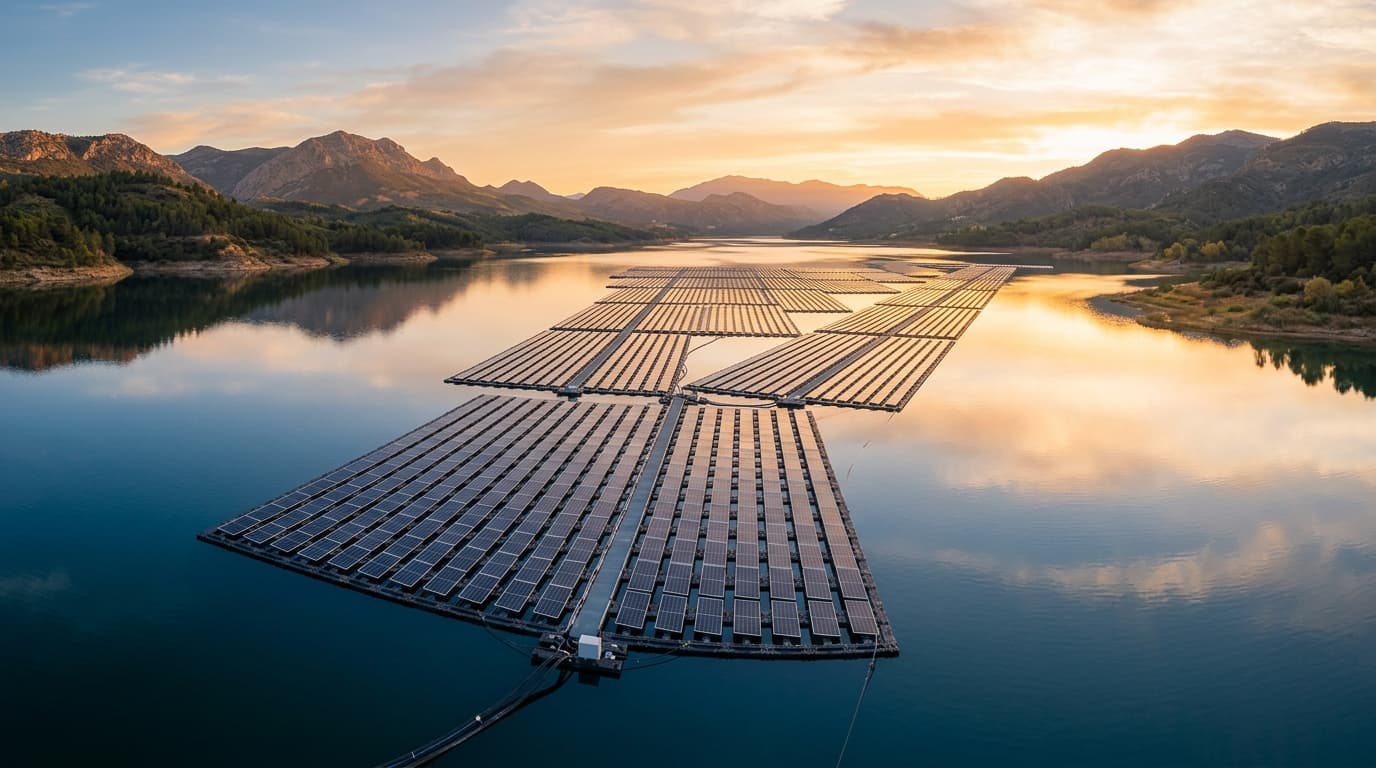
If you’ve been reading the news recently, you might have seen headlines about a massive new solar scheme approved by the Union Cabinet: the Pradhan Mantri Surya Sarovar Yojana (PM-SSY). For many homeowners in Uttar Pradesh who are actively planning to install a solar system, this major policy announcement immediately sparks a crucial question: Is this a new subsidy I should apply for, or does it change my current PM Surya Ghar benefits?
Let’s clear the air right away: the PM Surya Sarovar Yojana and the PM Surya Ghar Muft Bijli Yojana are two completely separate initiatives serving entirely different purposes. While PM Surya Ghar is designed to help everyday citizens put solar panels on their residential roofs, the newly announced PM-SSY is a utility-scale program focused on putting vast arrays of solar panels on water bodies like reservoirs, lakes, and hydroelectric dams.
So, if this scheme isn't meant for your roof, why should you care about it? In this comprehensive guide, we are going to break down exactly what this ₹5,070 crore floating solar scheme actually is, how the technical and financial aspects work behind the scenes, and most importantly, what it means for anyone currently weighing the decision to transition to solar power in India. We'll separate the facts from the noise so you can make informed decisions about your own home energy needs without getting tangled in policy confusion.
What Is PM Surya Sarovar Yojana? (The Basics)
The Pradhan Mantri Surya Sarovar Yojana (PM-SSY) is an ambitious, centralized government scheme aimed at rapidly scaling up India’s floating solar capacity. But what exactly is "floating solar"? Technically known as Floating Solar Photovoltaic (FSPV) systems, this technology involves mounting traditional solar panels on specialized buoyant platforms, or pontoons, that float safely on the surface of calm water bodies. These structures are securely anchored to the bed or banks of the water body to withstand wind and water currents.
Instead of acquiring vast tracts of land—which is often expensive, legally complex, and required for agriculture or urban expansion—developers can utilize the vast, unused surface area of existing water reservoirs, industrial ponds, and hydroelectric dams. The PM-SSY scheme is a targeted government initiative to incentivize this specific type of infrastructure by providing structured financial support to public and private developers.
By removing the significant bottleneck of land acquisition, the government hopes to accelerate the transition to renewable energy. Under this scheme, large-scale developers and state agencies are given the financial backing required to survey water bodies thoroughly and eventually build out utility-scale solar farms that will feed directly into the national electricity grid.
The Numbers at a Glance
To truly understand the sheer scale and ambition of the PM Surya Sarovar Yojana, it helps to look at the hard figures. Here is a breakdown of the key metrics driving this national initiative:
| Metric | Figure |
|---|---|
| Total outlay | ₹5,070 crore |
| Target capacity | 5,000 MW (5 GW) floating solar |
| Current installed floating solar capacity | ~700 MW |
| Co-located energy storage | Minimum 2 hours per project; ~10,000 MWh scheme-wide |
| Sanctioning window | FY 2026-27 to FY 2030-31 |
| Disbursement continues until | FY 2032-33 |
| Cabinet approval date | 31 July 2026 (announced 1 August 2026) |
| Estimated national floating solar potential (NISE) | ~102.18 GWp |
| Projected jobs | 16,000-17,000 (FTE) |
| Projected CO2 reduction | ~10 million tonnes/year once commissioned |
(Source: PIB press release, Union Cabinet, 31 July 2026 — pib.gov.in)
Note: Figures current as of August 2026 per the official Cabinet announcement; scheme implementation details (state allocations, tender timelines) may be finalized in phases — check pib.gov.in for updates.
How the Money Is Disbursed
A crucial detail of the PM Surya Sarovar Yojana is how the ₹5,070 crore budget is actually distributed. Unlike the direct-to-beneficiary transfers that homeowners see deposited straight into their bank accounts with rooftop solar, this funding is heavily execution-linked and targeted strictly at utility-scale developers. The disbursement follows a strict two-tranche structure designed to ensure accountability.
The first part of the funding allows for up to ₹50 lakh per project to be disbursed pre-construction. This initial capital is earmarked exclusively for vital preliminary activities like bathymetry (mapping the depth and terrain of the water body's floor), hydrography, and rigorous environmental impact studies. Building on water is inherently complex, and these assessments are mandatory before a single solar panel touches the surface of a reservoir.
The second, much larger tranche provides ₹1 crore per Megawatt (MW), but this is disbursed only after commissioning. This condition is incredibly important. It means developers don't get the bulk of the subsidy just for winning a tender or holding a groundbreaking ceremony. They must successfully build, connect, and operationalize the floating solar farm—proving it generates power—before the funds are officially released. This performance-linked approach ensures that taxpayer money is spent on actual, functioning renewable energy assets rather than stalled or abandoned projects.
Why Floating Solar, and Why Now
You might be wondering why the government is pushing so hard for floating solar when traditional, ground-mounted solar farms have been the industry norm for years. There are several strategic and environmental reasons driving the PM Surya Sarovar Yojana at this specific moment in India's energy transition.
The most pressing issue is land scarcity. Setting up a utility-scale solar farm requires massive plots of land—often several acres per megawatt. In a densely populated country like India, acquiring contiguous, non-agricultural land is incredibly challenging, socially sensitive, and often causes years of delays. Floating solar bypasses this issue entirely by utilizing the vast, open surfaces of existing reservoirs and dams, turning idle water surfaces into productive energy assets without displacing a single farmer.
Additionally, floating solar panels enjoy a modest efficiency bonus. Solar panels generate heat as they absorb sunlight, and excessive heat actually causes a drop in their electrical output (known as the temperature coefficient). The water beneath a floating solar array provides a natural, passive cooling effect, helping the panels run at slightly lower temperatures. While you shouldn't overstate this benefit—it typically results in a few percentage points of improved efficiency—it is a welcome technical advantage over ground-mounted systems baking in the summer sun.
Furthermore, a defining feature of this scheme is its "storage-mandatory-by-design" approach. Earlier schemes focused almost entirely on pure generating capacity. PM-SSY requires a minimum of 2 hours of co-located energy storage (usually large battery banks) per project. This is a massive shift in grid management. It means the energy generated during peak afternoon sunlight hours can be stored and fed into the grid during the evening when demand spikes, making the broader electricity grid much more stable and resilient.
Finally, the scheme aligns closely with the Aatmanirbhar Bharat initiative. By creating a predictable pipeline of massive, multi-megawatt floating solar projects, it provides domestic manufacturers of solar panels, pontoons, and grid-scale batteries the certainty they need to aggressively scale up their local production lines and reduce reliance on imports.
PM Surya Sarovar Yojana vs. PM Surya Ghar — What's the Difference?
Because the names are somewhat similar and both involve solar energy, it is incredibly easy to confuse PM Surya Sarovar Yojana with PM Surya Ghar. However, mixing them up can lead to a lot of frustration if you are trying to navigate residential subsidies. To help you understand exactly where each scheme fits, here is a direct comparison:
| PM Surya Ghar | PM Surya Sarovar Yojana | |
|---|---|---|
| Who it's for | Homeowners, Housing Societies | Developers, State Agencies, PSUs |
| Where it sits | Residential Rooftops | Reservoirs, Dams, Industrial Ponds |
| Subsidy route | Direct to homeowner bank account (DBT) | Per-project, post-commissioning to developers |
| Can you apply? | Yes, as an individual | No, corporate/government entities only |
Does This Affect Uttar Pradesh Homeowners at All?
If you are a homeowner in Uttar Pradesh—whether in Lucknow, Varanasi, Noida, or Prayagraj—you might be asking: "Does this scheme have any real, tangible impact on me?"
On a macro level, Uttar Pradesh is home to large water bodies, reservoirs, and extensive canal networks. It is possible that some FSPV projects will eventually be developed within the state's borders, though implementation will depend entirely on state-level allocations, feasibility studies, and tenders over the coming years.
However, when it comes to your own home and your electricity bills, you need to look at the realistic, honest connection. Utility-scale schemes like the PM-SSY exist on a completely separate track from residential rooftop solar. This new scheme adds massive renewable capacity to the statewide electricity grid to help meet overall demand. It does not change the fundamental rules of your residential power connection.
Specifically, the PM Surya Sarovar Yojana does not affect your UPPCL (Uttar Pradesh Power Corporation Limited) electricity tariffs, it does not alter the net metering regulations that govern how you are credited for the power you export, and it absolutely does not change the PM Surya Ghar subsidy amounts you are eligible for when installing panels on your roof.
We strongly advise homeowners who are currently deciding whether to install solar to not use this scheme as a reason to "wait and see." PM-SSY is a fantastic step forward for the nation's energy mix, but it does not affect your personal residential timeline or eligibility. The math and the compelling payback period for rooftop solar remain exactly the same today as they were before this announcement.
Common Misconceptions About This Scheme
Because policy announcements are often dense and lack simple explanations, several misconceptions have already started circulating online about the PM Surya Sarovar Yojana. Let’s address the most common ones directly:
"This is extra subsidy for my rooftop system." This is unequivocally false. As detailed in the comparison table above, PM-SSY is exclusively for large-scale floating projects on commercial and public water bodies. It does not provide any additional financial incentives or bonuses for residential rooftop installations.
"This means panel prices will drop for me soon, so I should wait." While large-scale schemes do encourage domestic manufacturing scale-ups over time, this is an indirect, multi-year effect. Furthermore, the specialized components for floating solar (like pontoons) don't impact residential supply chains. Do not delay your residential solar installation on the assumption that PM-SSY will cause an immediate or dramatic plunge in the retail cost of solar panels for your home.
"I can apply for this as an individual." This is incorrect. The scheme is designed strictly for project developers, Public Sector Undertakings (PSUs), and state agencies capable of executing complex, multi-megawatt engineering projects. Individual citizens cannot apply.
"This scheme replaces PM Surya Ghar." False. PM Surya Ghar remains the active, flagship scheme for residential rooftop subsidies across India. The two programs run parallel to each other, tackling different segments of the renewable energy sector simultaneously.
What This Signals for Solar in India
The launch of the PM Surya Sarovar Yojana is a strong indicator of where India's energy infrastructure is heading in the late 2020s. By aggressively moving onto water bodies, the government is signaling that it intends to bypass the land acquisition bottlenecks that have historically slowed down large infrastructure projects, ensuring that capacity targets can actually be met.
Furthermore, the mandatory inclusion of battery storage is a critical evolution in energy policy. It shows a mature commitment to grid stability, ensuring that renewable energy is not just generated when the sun is shining, but is dispatchable and available when the nation actually needs it during evening peak hours. Ultimately, schemes like PM-SSY demonstrate a sustained, multi-layered government commitment to renewable energy—tackling massive utility-scale challenges on water while simultaneously empowering everyday citizens to take charge of their energy bills on their rooftops.
Frequently Asked Questions (FAQs)
The PM Surya Sarovar Yojana is a ₹5,070 crore central government scheme aimed at installing 5,000 MW of floating solar projects on water bodies like reservoirs and dams across India. The scheme targets utility developers and state agencies to help bypass land scarcity issues and scale up renewable energy.
PM Surya Ghar is meant for individual homeowners to install solar panels on their residential rooftops with direct-to-bank subsidies. In contrast, PM-SSY is a utility-scale scheme strictly for large developers to build massive floating solar farms on lakes, reservoirs, and dams.
The scheme offers a two-part financial structure: up to ₹50 lakh per project for pre-construction feasibility studies (like bathymetry and environmental assessments), followed by a performance-linked disbursement of ₹1 crore per MW strictly after the project is successfully commissioned and generating power.
No, individual homeowners cannot apply for this scheme. It is exclusively structured for commercial project developers, state energy agencies, and Public Sector Undertakings (PSUs) that have the capacity to build utility-scale infrastructure.
Yes, marginally. The water beneath a floating solar array provides a natural, passive cooling effect, which prevents the panels from overheating. This allows them to operate slightly more efficiently than traditional ground or roof-mounted panels, resulting in a small increase in energy yield.
Any impact on residential panel prices will be indirect and take years to materialize as domestic manufacturing scales up. While the scheme encourages local production, you should not wait to install rooftop solar in the hopes of immediate price drops linked directly to this announcement.
Absolutely not. These are two completely distinct schemes serving different sectors. The introduction of PM-SSY does not change your eligibility, the subsidy amounts, or the application process for the residential PM Surya Ghar scheme.
The scheme's official sanctioning window runs from FY 2026-27 to FY 2030-31, with disbursements continuing until FY 2032-33. Utility-scale projects require extensive environmental and water-depth studies before construction begins, so actual commissioning will roll out gradually over the next several years.
Ready to Go Solar?
While the PM Surya Sarovar Yojana is a massive leap forward for India's utility-scale grid, the best way to secure your own energy independence is still right above your head. If you’re a homeowner in Uttar Pradesh evaluating rooftop solar, the PM Surya Ghar scheme is currently active and offering substantial subsidies directly to you.
At Ensolvar, we specialize in helping homeowners navigate the entire transition—from choosing the right system size to handling the complex subsidy paperwork and securing final net metering approvals with UPPCL. We make going solar simple, transparent, and hassle-free.
Curious about how much a system would cost for your home? Chat with our solar experts directly on WhatsApp: Click here to message us Or give us a call at: tel:+917607780130
Helpful Resources to Get Started:
- Learn about the PM Surya Ghar Subsidy
- Solar System Prices in Lucknow
- Solar System Prices in Varanasi
- Solar System Prices in Noida
- View all our Service Locations
Data Sources Referenced
| Data Point | Source |
|---|---|
| Scheme approval, outlay, capacity targets, timelines | PIB Press Release, Union Cabinet, 31 July 2026 — pib.gov.in |
| Floating solar national potential (102.18 GWp) | NISE assessment, cited in PIB release |
| Current installed floating solar capacity (~700 MW) | Government/industry reporting at time of scheme approval |
| PM Surya Ghar rooftop subsidy structure | MNRE Operational Guidelines — pmsuryaghar.gov.in |